
"Do I need a permit for this?" is one of the first questions homeowners ask us. The honest answer is: it depends on what you are changing, not how big the room feels.
New Jersey uses the Uniform Construction Code statewide (N.J.A.C. 5:23). Town offices enforce it, but the rules are the same from Hoboken to Hackensack. We are a licensed general contractor (NJ Home Improvement Contractor License #13VH13409900). Here is how we explain the three buckets.
Ordinary maintenance: usually no permit
Under N.J.A.C. 5:23-2.7, ordinary maintenance can be done without filing a permit or notifying the construction official. Common examples include:
- Painting, wallpaper, trim, and flooring
- Replacing a window or door in the same opening without changing the size or framing
- Replacing cabinets, bathroom accessories, or other non-structural built-ins
- Repairing or replacing roof covering or siding on a one- or two-family dwelling (with a few material exceptions)
- Replacing faucets, traps, or a similar fixture when you do not rearrange the piping
- Replacing a receptacle, switch, or light fixture with a like item (outside hazardous locations)
- Installing battery-powered smoke or carbon monoxide alarms
Ordinary maintenance does not include cutting away a load-bearing wall, removing a structural beam, changing required exits, or adding to, altering, replacing, or relocating water/sewer/gas piping, electrical wiring (beyond limited exceptions), or standpipes. If the work moves pipes or wires, or touches structure or fire safety, you have left the "no permit" lane.
Minor work: notice first, permit follows
N.J.A.C. 5:23-2.17A covers "minor work." You still need a construction permit, but you may start after you give the local enforcing agency notice (oral or written). Then file the completed permit application within five business days, and pay the fee before the permit is issued.
Minor work includes things like:
- Renovation or alteration in an existing one- or two-family dwelling when no primary structural members are altered and the work is not reconstruction
- Replacing existing plumbing piping with like-capacity approved material, or adding fixtures in existing space when the water and drain systems do not need to be upsized
- Replacing a water heater, boiler, furnace, or air-conditioning unit with one of like capacity
- Limited new electrical work in one- and two-family dwellings (for example, five or fewer outlets when the existing service and circuits can handle the load)
- Building or fully replacing a porch or stoop that does not support a roof or part of the building
Minor work still gets a final inspection. The agency is supposed to inspect within three business days of the request (or another time within 30 days that you both agree to), then issue a certificate of approval based on what is visible.
Full permits: what usually needs one
Under N.J.A.C. 5:23-2.14, most construction, alteration, or regulated equipment work needs a permit first—except ordinary maintenance, minor work (with notice), and true emergencies.
In remodel terms, that usually means a building, plumbing, electrical, and/or fire permit when you are:
- Removing or cutting load-bearing walls or structural members
- Relocating plumbing (new drain, water, or gas runs)
- Adding circuits, a panel, or new wiring beyond ordinary or minor-work limits
- Building an addition, a new deck (beyond ordinary repair of an existing non-roof-supporting deck), or finishing a basement or attic as living space
- Changing the use of a space
Towns issue separate technical sections (building, plumbing, electrical, fire) for the subcodes involved. Ask which ones your scope needs before anyone opens a wall.
Who pulls the permit?
Under N.J.A.C. 5:23-2.15(d), the owner, the owner's agent, or a licensed engineer, architect, plumber, electrician, HVAC contractor, or other contractor on the job may apply. If someone other than the owner applies, there must be an owner affidavit that the work and the application are authorized. The permit remains the owner's property even when a contractor files it.
We prefer to pull permits for work we are responsible for, so the scope matches the job and we meet the inspector. A homeowner can apply, but you remain the permit holder if something fails. Related reading: choosing a licensed general contractor in North Bergen.
Inspections: walls stay open until they pass
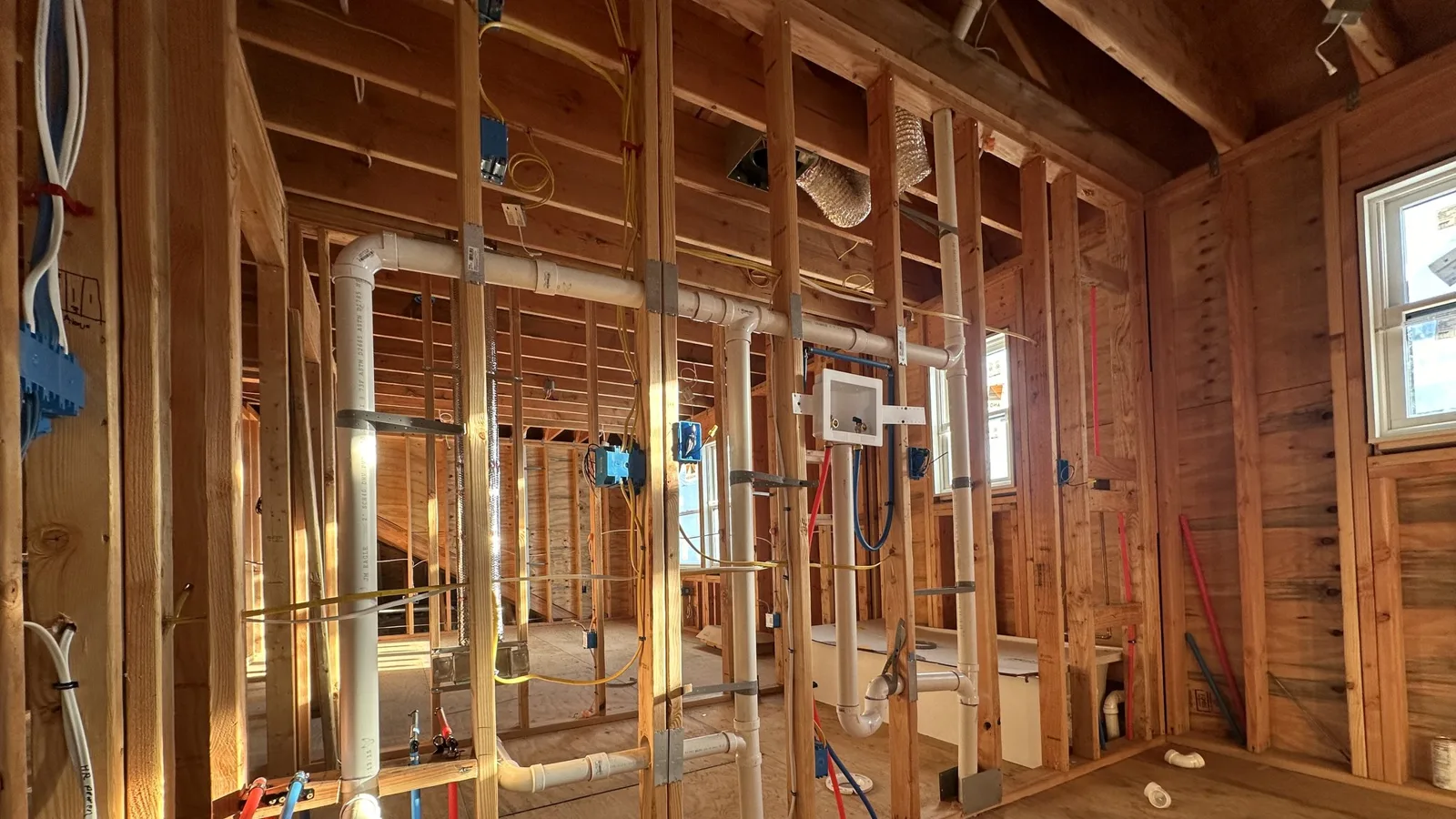
N.J.A.C. 5:23-2.18 sets the sequence. For one- and two-family work, rough electrical and rough plumbing come first. Framing follows after those roughs and after HVAC ductwork is in. Insulation is inspected after the other roughs and before interior finish. Final building, plumbing, electrical, and fire inspections come at the end, before a certificate of occupancy or certificate of approval when one is required.
Request inspections in writing at least 24 hours ahead, and do not bury work the inspector still needs to see. That open-wall stage is why we schedule rough-ins carefully. See also our Weehawken bathroom remodel tips and Secaucus home additions posts.
Condo and co-op boards are separate from the town
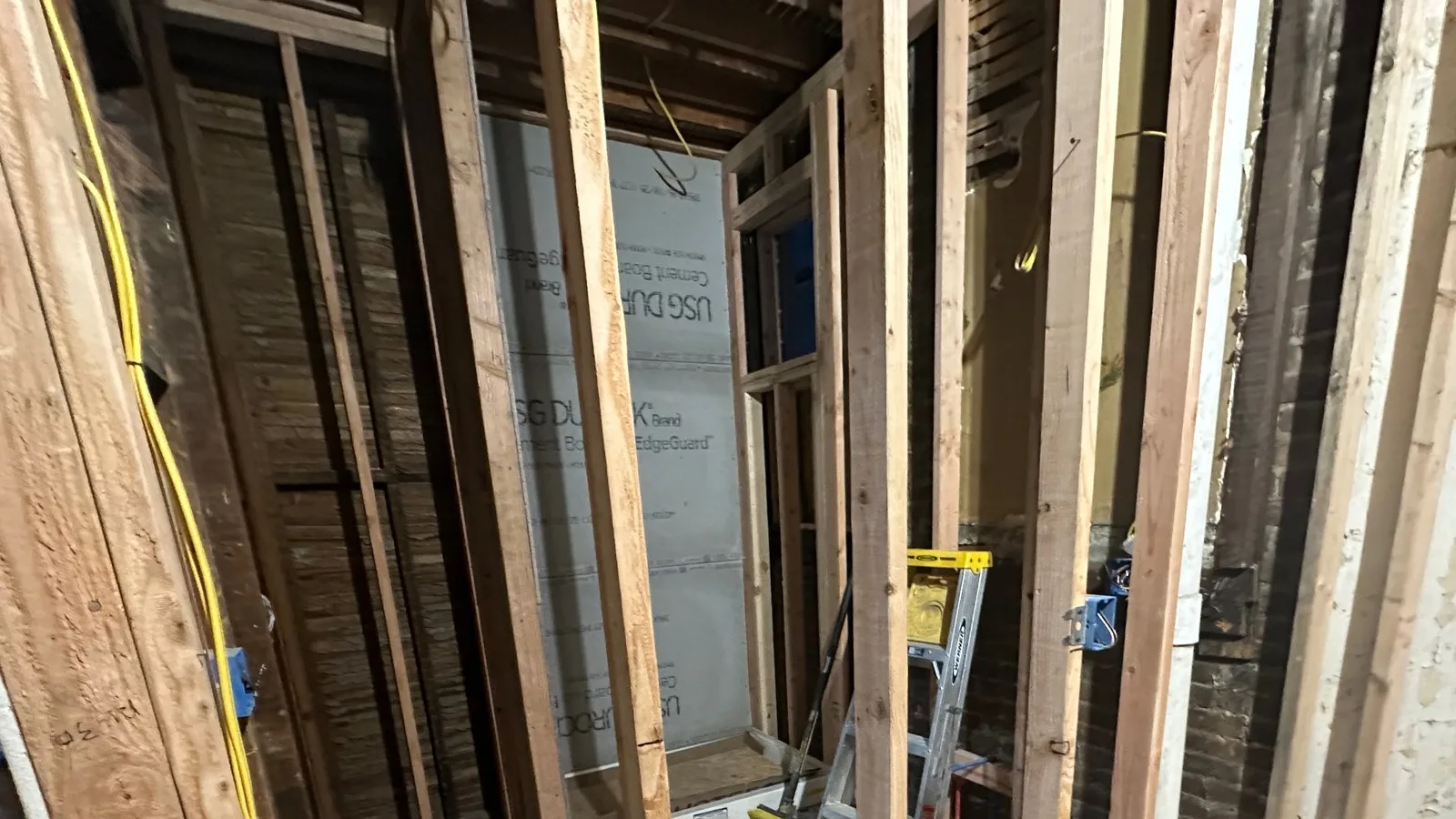
Board or management approval is not a construction permit. The association may require its own application, insurance certificates, work hours, and protection of common areas. The town still needs the UCC permits for regulated work. Getting one without the other can stop the job. We plan both tracks up front—same approach we take when planning a Hoboken renovation.
What if work was done without permits?
Skipping a required permit is a code violation. Under N.J.A.C. 5:23-2.31, the enforcing agency can issue a stop-construction order, and penalties can run up to $2,000 per violation for failing to get a required permit before starting, or for ignoring a stop-work order.
NJ DCA Bulletin 06-1 explains what often happens later: when prior unpermitted work turns up (sometimes at resale), officials may use a Certificate of Continued Occupancy (CCO) inspection to document what is visible. They are not required to open finished walls unless there is probable cause or a life-safety concern—but if something looks unsafe, uncovering can be required. Corrective work then needs its own permit.
Local certificate rules vary. In Hoboken, a CO is required for certain rehabs (change of use, bulk, unit or bedroom count, or work that vacates the building), while a simple resale of an existing unit does not by itself require a CO or CCO. Jersey City does not issue new certificates of occupancy just for buying and selling, but a new CO is required after new construction or a major renovation. Unpermitted work can stall a sale, delay a CO after a big remodel, or force expensive reopen-and-fix.
Planning a New Jersey renovation?
Hoboken GC LLC is licensed and insured, open 24/7, and serves Hoboken and Hudson County. We put the scope in writing, pull the right permits, and meet the inspectors. Email hobokengc2023@gmail.com or find us on Instagram at @hoboken_gc_llc.
Call (201) 815-4260 or request a free estimate at hobokengc.com. Tell us what you want to change, and we will say plainly whether it is ordinary maintenance, minor work, or a full permit job.