
Jersey City kitchens come in every shape: a galley in a brownstone, a condo galley with one window, a railroad-layout apartment where the fridge sits in the hallway. Remodeling one of them is not just picking cabinets. You are working inside an older building, sometimes under a condo board, and under New Jersey and Jersey City construction rules.
We are a general contractor that works in Jersey City and across Hudson County. Here is what we walk through with homeowners before anyone pulls a single cabinet.
Start with how you cook, not the showroom
Before you fall in love with a finish, map the room you actually have.
- Where does the work happen? Sink, range and fridge should still make a usable triangle. In a narrow Jersey City galley, protect aisle width so two people can pass.
- What stays put? Moving a sink or range in a stacked multi-family building can mean opening the floor below for drains or chasing a gas line through a neighbor's ceiling.
- Storage and trash. Plan tall cabinets, pull-outs and a real spot for trash and recycling before you order the island.
- Light and ventilation. Many kitchens only have one window. Recessed lights, under-cabinet lighting and a hood that vents correctly matter as much as the backsplash.
We sketch the layout on site so you can see traffic, door swings and appliance clearances before demolition.
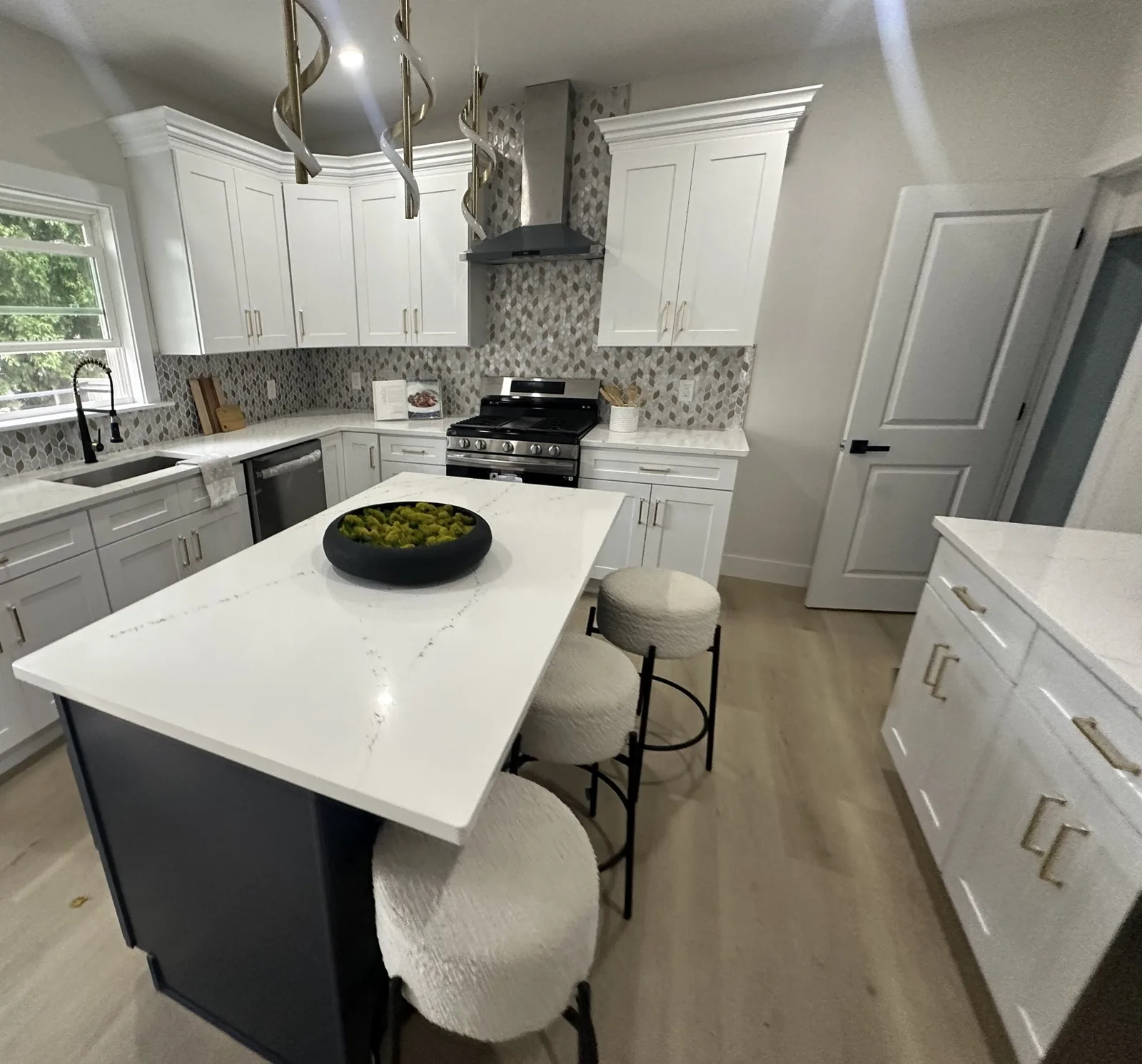
Permits in Jersey City: cosmetic vs. real construction
Jersey City follows the New Jersey Uniform Construction Code. Construction permits are handled by the Construction Code office at One Jackson Square. Apply online at jcnj.org/permitportal; plumbing and electrical technical forms, and plans when required, also have to be brought in person — the portal alone is not the whole process.
Rough rule of thumb for kitchens:
- Usually no permit: painting, new flooring, replacing cabinets in the same locations, new countertops and backsplash, like-for-like appliance swaps that do not change wiring, plumbing or gas.
- Needs a permit: moving or adding plumbing (sink relocation, new dishwasher drain, supply changes), new electrical circuits (range, dishwasher, microwave, GFCI at counters), gas line work or gas appliance changes, removing or altering walls, and any structural work.
Gas work often also means a PSE&G inspection before service is restored. That is separate from the city rough-in and final inspections. A licensed contractor should pull the permits, schedule inspections and meet the inspectors so you are not left juggling offices yourself.
Bigger scopes can trigger New Jersey's Rehabilitation Subcode for existing buildings. The more you open up, the more related systems may need to come up to current standards. Plan for that early.
Condos, co-ops and multi-family buildings
A large share of Jersey City kitchens sit in buildings with boards, bylaws and shared stacks.
- Get building approval in writing. Many condo and co-op boards require an alteration agreement before demolition. They may set work hours, require insurance certificates, and want to see plans for plumbing and electrical.
- Shared plumbing and vents. Your dishwasher drain and range hood may tie into stacks that serve other units. Cutting into them without a plan can flood or vent into someone else's kitchen.
- Freight and debris. Confirm elevator reservations, dumpster rules and how demo debris leaves the building. Boards care about this as much as the finishes.
- Quiet hours. Plan noisy demolition and cutting for the windows the building allows. Night and weekend work is often restricted.
If you own a two-family or small multi-family, treat the unit below or beside you the way you would treat a tenant: notice, short shutoffs, dust control and fire separation left intact when walls or floors open.
Plumbing, electrical and gas: the parts that make or break the job
Finishes are the fun part. The systems underneath decide whether the kitchen works for the next twenty years.
- Electrical: Dedicated circuits for the range, dishwasher and often the microwave or disposal, plus GFCI at countertop outlets. Older panels in Jersey City walk-ups and brownstones may not have spare capacity — we check early so a service upgrade is not a surprise after cabinets are ordered.
- Plumbing: Moving a sink even a few feet can mean new drain lines, new shutoffs and sometimes opening the ceiling below. Dishwashers need an air gap or high loop per code.
- Gas: Relocating a gas range needs licensed gas work, city permits and usually the utility's sign-off. Plan the path and inspection sequence before demo day.
- Ventilation: A powerful range needs a hood that actually captures smoke. Recirculating units help when you cannot duct out, but they are not the same as a real exhaust.
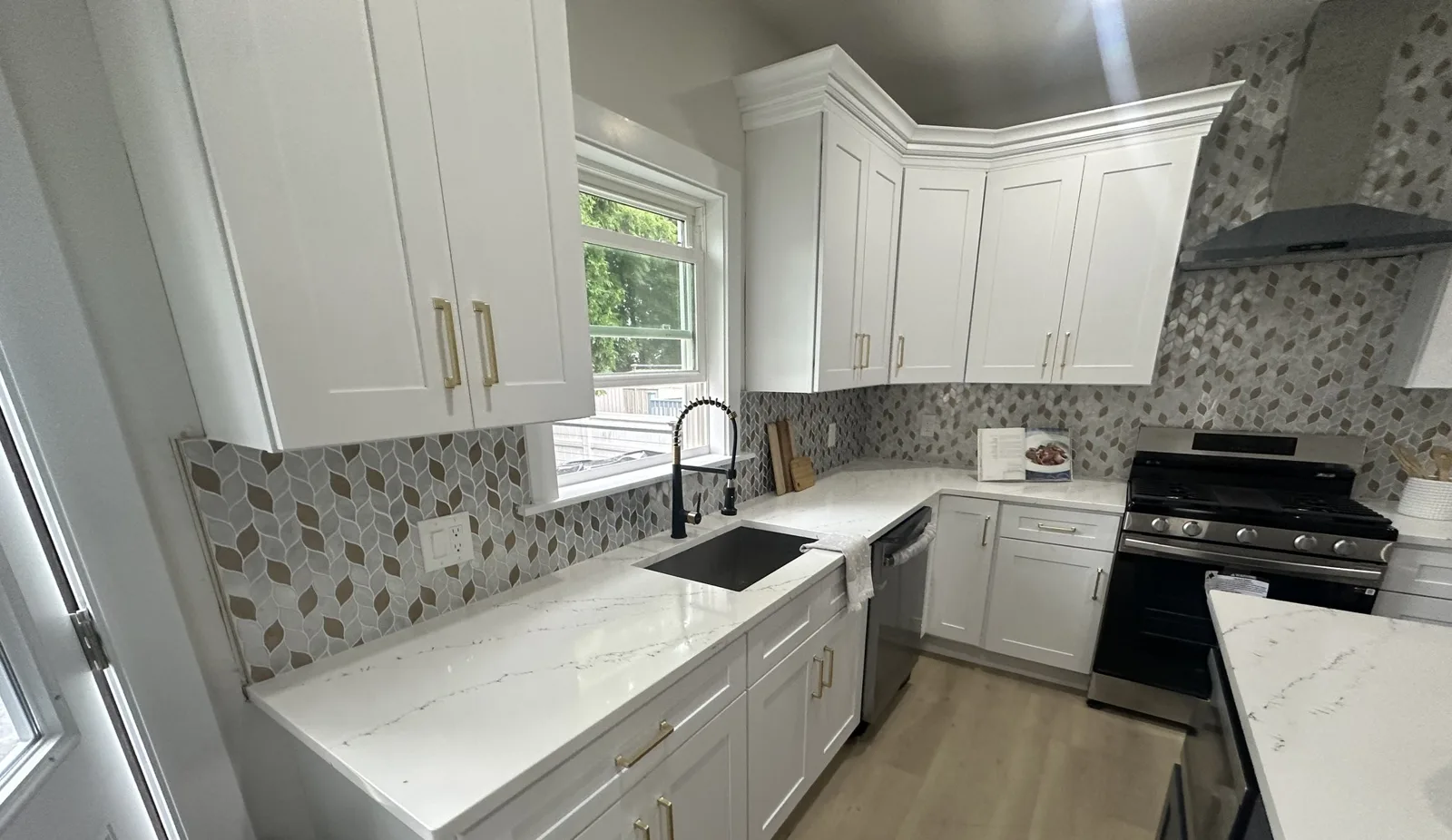
Timeline without the guesswork
Every kitchen is different, so we will not invent a one-size schedule or a price list here. From Jersey City and Hudson County jobs:
- Cabinet and appliance lead times often stretch weeks.
- City review and board approval sit on the critical path — do not schedule demo for the week after you apply.
- Rough plumbing, electrical and gas inspections have to pass before walls and cabinets close up.
- Countertops are usually templated after cabinets are set.
- Keep a contingency for surprises in older buildings: bad subfloors, outdated wiring, cast-iron drains, out-of-square walls.
Ask for a written, itemized estimate that lists what is included and what is not. If a bid is vague on plumbing, electrical or permits, that cost will show up later.
Hire a licensed, insured general contractor
New Jersey requires Home Improvement Contractor registration for this kind of work. Look for a contractor who is registered, carries insurance, pulls permits in their name and puts the scope in writing. Hoboken GC LLC is licensed and insured, NJ Home Improvement Contractor License #13VH13409900. We are open 24/7 and serve Jersey City, Hoboken and all of Hudson County. You can reach us at hobokengc2023@gmail.com or on Instagram at @hoboken_gc_llc.
Ready to talk about your Jersey City kitchen?
Call us at (201) 815-4260 or request a free estimate at hobokengc.com. We will walk the space with you, flag permit and board issues early, and give you a clear written plan before anything comes out.