
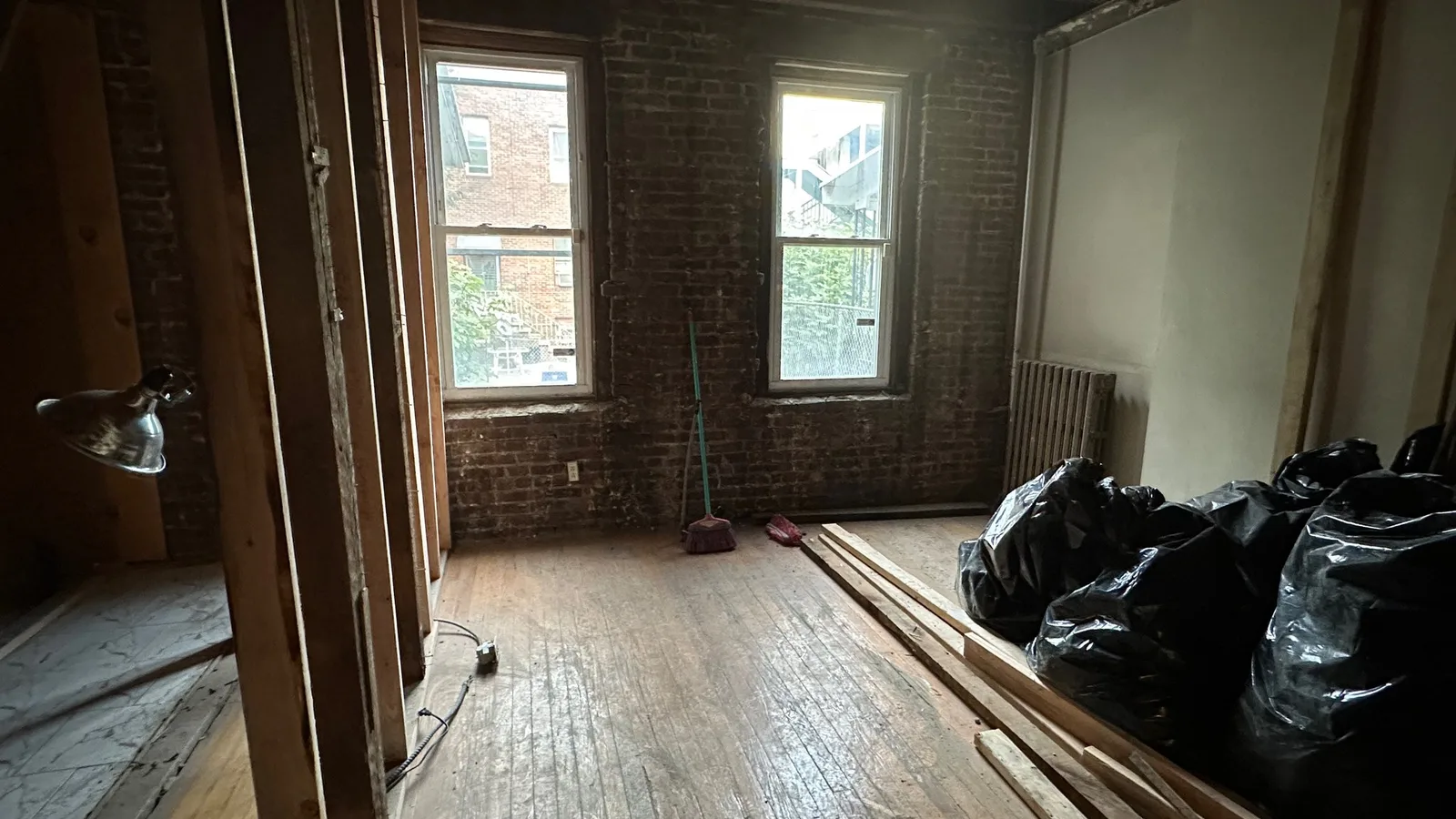
A lot of the homes we work in across Hudson County are old. Brick row houses, two-families, wood-frame homes with plaster walls and original trim. They have great bones, and they often have something else under the newer paint: lead.
Here are straight answers to the lead questions homeowners ask us. We are a licensed general contractor (NJ Home Improvement Contractor License #13VH13409900), not a lead inspector, so where testing is needed we will tell you who does it.
Does my house have lead paint?
If it was built before 1978, it might. That is the year lead-based paint was banned for home use, so it is the cutoff the federal and New Jersey rules use. A house built in 1925 has had many coats of paint since then. The newer coats may be lead-free, but the older layers underneath can still contain lead.
Lead paint that is intact and in good shape is not the main worry. The risk comes when it gets disturbed: sanded, scraped, cut, demolished, or worn down on windows and doors that rub. That turns it into dust and chips, and lead dust is a known hazard, especially for young children and pregnant women.
A renovation is exactly the kind of work that disturbs paint. So if your home is pre-1978, lead belongs in the plan from day one.
How do I find out for sure?
You have two real options:
- A lead inspection or risk assessment by a lead evaluation contractor certified by the New Jersey Department of Community Affairs (DCA). An inspection tells you where lead paint is; a risk assessment looks at where it is causing a hazard right now.
- Testing of the specific surfaces you plan to disturb. Under the federal rules, a certified renovator can test components with an EPA-recognized test kit or send paint chips to an EPA-recognized lab.
If you skip testing, the safe approach is simple: treat the paint in a pre-1978 home as if it contains lead.
What rules apply when a contractor works on a pre-1978 home?
In New Jersey, the federal EPA runs the lead Renovation, Repair and Painting (RRP) program; the state has not taken it over. Here is what it means in plain terms:
- It covers paid work in pre-1978 homes and child-occupied facilities that disturbs painted surfaces. That includes remodeling, plumbing, electrical, carpentry, painting prep, and window replacement.
- Small jobs have a threshold. Disturbing 6 square feet or less of painted surface per room inside, or 20 square feet or less outside, is treated as minor repair. But window replacement and demolition are never "minor" under this rule, no matter the size.
- Before work starts, the contractor has to give the owner and occupants EPA's "Renovate Right" lead pamphlet and document that you got it.
- The firm has to be EPA-certified, and the job needs a certified renovator who trains the crew in lead-safe work practices.
If a contractor has never mentioned any of this on a pre-1978 job, ask why.
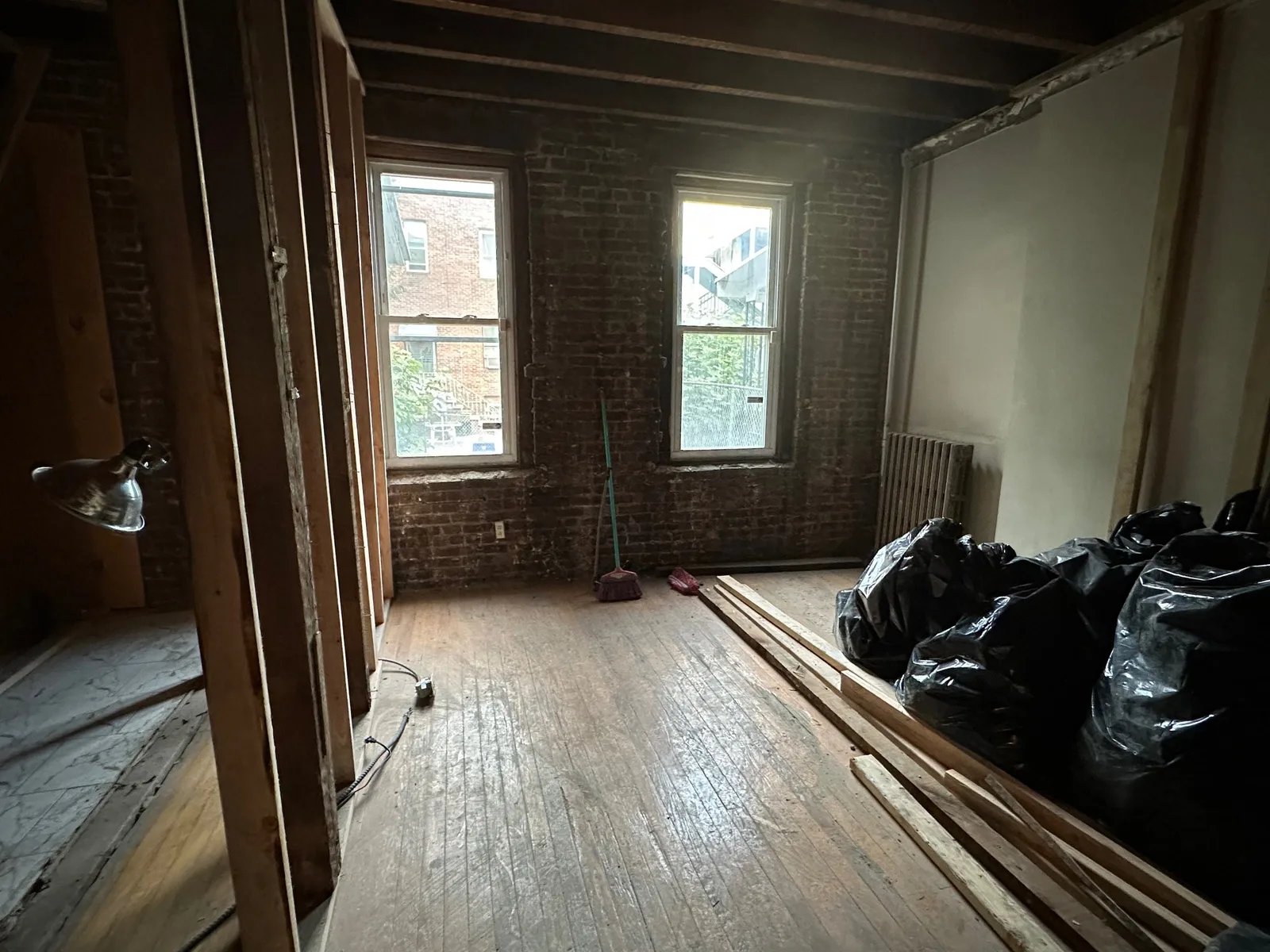
What does lead-safe work actually look like?
The rule is mostly about keeping dust inside the work area and getting it out completely at the end. On site, that means:
- Containment. The work area is closed off with plastic sheeting so dust does not travel to the rest of the house.
- No dust-throwing shortcuts. Torching painted surfaces is prohibited. Power sanding, grinding or planing painted surfaces is only allowed with a shroud and a HEPA vacuum attachment. Heat guns have to stay below 1,100 degrees Fahrenheit.
- Low-dust habits. Misting before scraping or cutting, scoring paint before prying trim off, and bagging debris in heavy plastic before it leaves the room.
- Real cleanup. HEPA vacuuming and wet wiping, then a cleaning check where window sills, floors and countertops are wiped and compared against an EPA verification card. If the cloth comes up too dark, that area gets cleaned again.
It takes a bit more setup time, and it is worth it. Plan for it in your schedule instead of treating it as a surprise.
Is renovating the same as lead abatement?
No, and the difference matters. Renovation is regular construction work done in a lead-safe way. Abatement is work designed to permanently get rid of lead hazards, like removing lead paint, permanently enclosing or encapsulating it, or replacing lead-painted parts.
In New Jersey, abatement has its own rules. It must be done by a DCA-certified lead abatement contractor, and it needs a permit under the Uniform Construction Code (see do I need a permit for my renovation in New Jersey?). If your goal is to make the house lead-free, not just to remodel a room, that is a separate conversation with a certified abatement firm and evaluator.
I rent out a unit. Does New Jersey require a lead inspection?
Probably, yes. Under New Jersey's lead-safe rental law (P.L.2021, c.182, as amended in 2024), most pre-1978 rental units must be inspected for lead-based paint hazards. After the first inspection, the unit has to be inspected every three years or at tenant turnover, whichever comes first. A turnover inspection is not needed if you still have a valid lead-safe certification. In two- and three-unit buildings, the shared common areas are inspected too.
There are exemptions, including units built in 1978 or later, units certified lead-free, certain short seasonal rentals, and some larger multiple dwellings that have been registered with DCA for at least ten years without outstanding lead violations. If a hazard is found, the owner has to fix it and get the unit re-inspected before it can be certified lead-safe. You also have to give new tenants the certification and attach it to the lease.
If you are renovating a rental unit, it is smart to time the work and the inspection together, so you are not repainting twice.
What should I ask before demo starts?
Before any walls come down in an older home, get clear answers to these:
- When was the house built, and has it ever been tested for lead?
- Which painted surfaces will this job disturb, and how much?
- Is your firm EPA lead-safe certified, and who is the certified renovator on this job?
- How will the work area be closed off from the rest of the house, and from kids and pets?
- How will you clean up and verify the area is clean before we move back in?
- If the job turns up more old paint than expected, how will that change the plan?
Planning a renovation in an older home?
With an older home, the trick is planning for what is behind the walls before the first hammer swings. We are licensed and insured, open 24/7, and we work in Hoboken, Jersey City, Union City and across Hudson County.
Call us at (201) 815-4260 or request a free estimate at hobokengc.com. You can also email hobokengc2023@gmail.com or see our recent work on Instagram at @hoboken_gc_llc.